
What you eat affects more than your weight. We talk a lot in The Beauty Detox Solution about how certain foods can affect your health and beauty. Foods that promote inflammation are among the worst offenders, robbing you of your vitality and vibrancy, and making you feel terrible. The promote general aging as well.
What Is Inflammation?
Inflammation is one of the body’s natural immune responses. When a foreign invader – such is an infection or injury – enters the body, your body responds with an inflammatory counter attack. While you may recognize inflammation when you sprain your ankle and it swells, that type of inflammation is localized. However, it can also be systemic, affecting your organs and internal structures.
Effects of Chronic Inflammation
- Studies have linked chronic low-grade inflammation to heart disease.
- Chronic early inflammation has been linked to dementia in older adults.
- Some studies suggest inflammation may cause common age-related diseases that lead to disability in older adults.
 Chronic inflammation can lead to chronic pain.
- Many autoimmune diseases such as inflammatory bowel disease are also linked to inflammation.
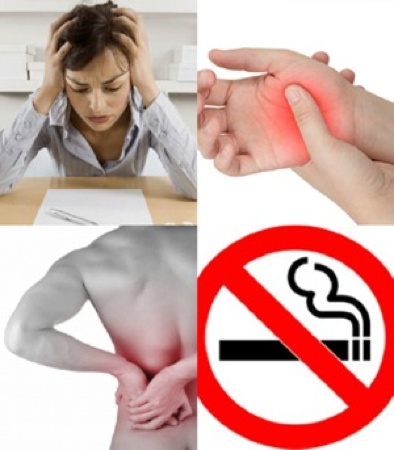 Chronic
 Causes of Chronic Inflammation
A number of lifestyle factors can cause chronic inflammation. These include:
- Stress
- Lack of sleep
- Pollution
- Smoking
- Lack of exercise
- Diet
The good news is you can control a number of the factors that cause inflammation. Getting plenty of sleep, stopping smoking if you do, and engaging in regular exercise will all make a difference. So will diet. The Beauty Detox lifestyle is an anti-inflammatory diet with a cleansing component that helps you rid your body of the toxicity leading to inflammation. The Beauty Detox lifestyle is an anti-inflammatory diet with a cleansing component that helps you rid your body of the toxicity leading to inflammation. Get a step-by-step guide to the Beauty Detox lifestyle!
Let’s take a closer look at the 9 worst foods that contribute to inflammation, and the 9 best anti-inflammatory foods for better health and beauty.
Foods that Cause Inflammation
1. Refined Starch and Sugar
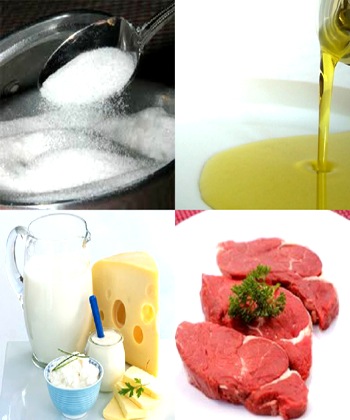
Avoid starches like white bread and pasta, and sugars such as high fructose corn syrup, and basically any ingredient that ends in “ose”. I even urge you to stay away from agave, which may be low in glucose but super high in fructose.
Starches and sugars are referred to as refined carbohydrates, which cause a rapid rise in blood sugar, triggering the release of insulin and causing a pro-inflammatory response. This could lead to chronic inflammation. Not only that, but refined carbs can also lead to gas and bloating. Ouch!
Learn how to metabolize carbs more efficiently and how to combat gas and bloating with my Feel Good Digestive Enzymes!
2. Processed Corn
You’d be shocked at just how much corn there is in processed foods. The food processing industry uses a number of corn derivatives such as high-fructose corn syrup, corn starch, corn oil because it is cheap and plentiful. In its refined form, corn spikes blood sugar, leading to an increased insulin and inflammatory response.
3. Peanuts
Peanuts are one of the most common food allergens. There are naturally occurring molds found on peanuts. Even if you don’t have an anaphylactic response to peanuts, your body may recognize them as foreign invaders and create an inflammatory response.
4. Vegetable oil
Many vegetable oils are high in omega-6 fats, reducing your body’s critical balance of omega-3 to omega-6 fats. While omega-6 fatty acids are not bad in and of themselves, when your body gets out of balance, inflammation can result. That’s why I recommend cooking with just a tiny amount of coconut oil, which contains medium chain fatty acids. Olive oil is okay in small amounts as it is a monounsaturated oil. Avoid corn, soybean, safflower, etc. oils and products that contain them- like vegan “butter” spreads and mayonnaise.
5. Dairy products
Dairy can cause inflammation because your body recognizes it as a foreign invader and fights it with an inflammatory response. That’s because the human body does not process the high levels of protein (casein) or sugar (lactose) in dairy products well. Learn more about the issues surrounding dairy and how the dairy industry is responding.
6. Red meat
Eating red meat produces a chemical called Neu5gc. The body produces an inflammatory immune response to it.
7. Wheat, rye, and barley
These grains all contain the common allergen, gluten. When an allergen enters the body, the result is an immediate inflammatory immune response.
8. Foods high in trans fats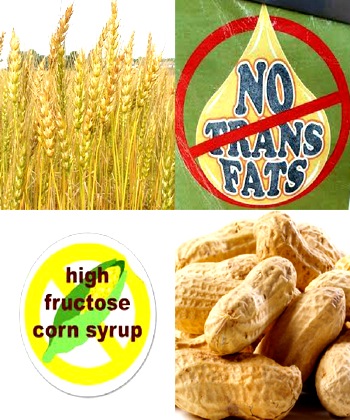
When you eat trans fats (hydrogenated oils found in many processed foods), they create low-density lipoproteins. LDLs feed inflammation.
9. Foods containing chemicals
The human body has not evolved to eat artificial chemicals such as additives, preservatives, food coloring, and the many other chemicals found in genetically modified foods and processed foods. Because your body doesn’t recognize these things as foods (and with good reason – they aren’t!), it launches an immune system response.
Anti-inflammatory foods
Good news! You can quiet inflammation with the foods you choose, as well. Here are my top nine.
1. Shiitake mushrooms
These Asian mushrooms contain high-molecular-weight polysaccharides (HMWP), which have been shown to improve immune function. When I am feeling run down I often eat shiitake mushrooms and they help me feel revived.
2. Dark, leafy greens
Spinach, kale, and romaine, etc. are all terrific inflammation fighters because they’re rich in antioxidants and other natural anti-inflammatory agents. Yet another reason to start your day with the Glowing Green Smoothie.
3. Turmeric
Turmeric has been shown to have strong anti-inflammatory properties. Plus, it’s delicious!
4. Flaxseed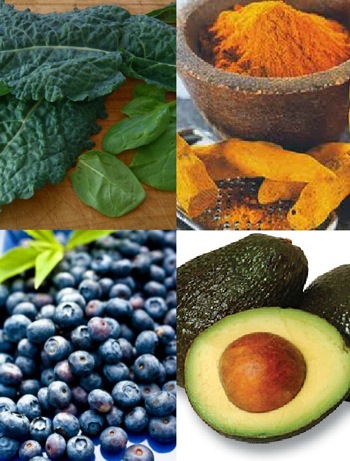
Flax contains omega-3 fats, which are anti-inflammatory. Try sprinkling a little freshly ground flax on your salad.
5. Blueberries
High in anti-oxidants, blueberries are a healthy and delicious anti-inflammatory food.
6. Broccoli, cabbage, and other cruciferous veggies
These foods are high in anti-oxidants, and they have a natural detoxifying effect. Therefore, you can eat them and cleanse your body of any harmful chemicals that are contributing to inflammation.
7. Probiotic & Enzyme Salad
My Probiotic & Enzyme Salad is made with raw, cultured veggies, which are packed with enzymes, vitamin C, and have natural cleansing properties to combat inflammation and promote healthy gut flora. If you’re looking for another great way to incorporate plant-based probiotics into your lifestyle, learn about my Feel Good SBO + Probiotics formula!
8. Chia seeds
Chia is high in inflammation fighting omega-3 fatty acids.
9. Avocados
These luscious fruits are high in carotenoids, which fight inflammation. They contain easily digestible monounsaturated fat, but don’t overdo it. 1/2 of a medium one is a day is a good maximum daily amount- and skip the oil on a salad if you are eating the avo with it.
I try to eat the anti-inflammatory foods regularly, but avoid mushrooms because of the mould. Do you find that mushrooms can be a problem for some people?
Mushrooms are a problem if one has candida or thrush
Very interesting information; thank you.
Thanks Kimberly keep up the good work. I am under a lot of stress these days , what’s the best stress fighter??? – many thanks
Meditation is the best stress fighter, look up mindful meditation. Ive done it everyday for 20 minutes and most of my stress has washed away. You essentially sit there and dont do anything and try and focus your awareness on your breath and body sensations. It switches off your stress response.
Agreed James- as long as the dairy is RAW. The way it’s been denatured is why humans react badly. Red meat that has been pastured raised without hormones/antibiotics/soy would likely not inflame either. Notice it is the human-manipulated foods that inflame, not natural foods that have been consumed for 1000s of years.
Humans react badly to cow’s milk because it was meant for a baby calf. The milk contains more casein and protein than a human needs.
As Dr. Oski explains in Don’t Drink Your Milk!, “The milk of each species appears to have been specifically designed to protect the young of that species. Cross-feeding does not work.
Doctors say cow’s milk can lead to iron deficiency anemia, allergies, diarrhea, heart disease, colic, cramps, gastrointestinal bleeding, sinusitis, skin rashes, acne, increased frequency of colds and flus, arthritis, diabetes, ear infections, osteoporosis, asthma, autoimmune diseases, and more, possibly even lung cancer, multiple sclerosis and non-Hodgkin’s lymphoma. All of this is “inflamation” or more simply put, mucus in the body.
Futhermore, the people who originally decided that adults should drink milk did not fully observe natural law. Cow’s don’t even drink cow’s milk! If fact, no other species continues to drink milk once they reach adulthood.
Are these just thoughts and notions that people have or is there a scientific basis for this? I’m just wondering because most people who seem to think like this are also vegans who then branch off into killing of animals tirades or something. I been having this very discussion just today and I’ve been trying to get an answer to a simple question. If a mother is unable to nurse her baby what can you give the child?
They can actually purchase breast milk, if they can afford it. Another option is to make almond milk by blending almonds & water & then separating the almond residue from the “milk.” You can add dates, figs or sea moss for added nourishment.
As for the scientific basis, Dr. Oski conducted studies for his book. You will find other info, if you research it.
There is scientific evidence to support the idea that any sort of dairy
in the diet leads to increased mucous production. This can lead to
digestive issues and sinus problems. Typically, mucosal production is
reserved for a response to a pathogen, such as bacteria and/or viruses.
The idea that dairy can induce such a response without a foreign invader
suggests that, perhaps, we ought not consume it, as that can lead to
unnecessary inflammation, predominantly in the gut. There is no
substitute for the wealth of antibodies, cytokines and other
immunological protection in breast milk, but if a woman is having
difficulty, there are a number of formulas available that can provide
the appropriate nutritional balance. The human immune system is not
really capable of going completely solo until about 2 years of age, so
regardless of whether a mother breast feeds, 0-2 years is the most
dangerous time to be alive, immunologically speaking. Hope that helps!
Is cheese ok?
It’s worse. It’s rotted milk! So, it clogs the entire system. Some people “tolerate” it better than others while it is silently attacking the body. Other people show various symptoms right away..
I went vegan, but one day was really really craving cheese. I used to like Cheddar….so I ate some (about 2″ by 4″ piece) Enjoyed it so much! Thought there must have been something in it I needed; maybe one of the amino acids…
That night I had the worst sleep ever, had horrible post nasal drip all night long. My throat was so clogged and I was exhausted. No more cheese, I think.
Hi Misty…I agree, no more dairy…Check out this link: https://bit.ly/1Mpdz1Q Sending Love and Health! ;)
Good food for thought!
Hi Kimberly,
Thanks for writing all this interesting blog posts!
I have 2 questions about the avocado:
– what do you mean with a medium avocado? How many grams is a medium one? I eat one avocado almost every day in my lunch, so this is important information for me :)!!
– in your avo-tomato lunch plate, you do combine oil and avocado together in one recipe; is this something you would never do anymore?
I hope you can answer my questions!! :)
Hey Kimberley. Love all the info. Keep it coming. Leaning to eat healthy is ongoing.
Hi Kim
Sorry this is unrelated… But I could really use your wisdom. I’m recently unable to get wet for intercourse. The only thing that has changed is my diet and the water I shower in is now city water instead of well water. I haven’t been following your beauty detox to perfection. But right now I eat only organic, I properly food combine, I’m vegan and I don’t eat soy or gluten or refined sugars. I also recently went cold turkey on drinking alcohol. Please help me. What can I eat or not eat that will make this go away, should I cut out my gluten free vegan bread? Or my organic oatmeal? I work out about 4 times a week if that helps. And ive only been eating this way for about a whole month. Or maybe it’s the soap and body wash I use, Johnson’s baby wash? I need your expertise thank you Kim!
are you getting enough water? this happens to me from dehydration sometimes and may take a few days of proper hydration to correct.
A vegan lifestyle might not be right for you metabolic profile. Though I thoroughly respect the motives behind such a lifestyle, as a nutritional physiologist I am convinced, after many years of study (biomedical sciences and clinical PNI), that some people cannot thrive on a diet lacking any source of animal protein and animal related nutrients (available B12, taurine, carnitine, etc.). In your situation it is easy (except for the spiritual part): try and see what a different diet can do for you. First try vegetarian with eggs rather than dairy (read ‘the cholesterol con’ if you are afraid of cholesterol) and preferrably add moderate consumption of fish and meat. Take some omega -3 supplement and get the 3/6 ratio balanced.
Wishing you well!
Ron
Hi Ron how you know when the vegetarian or vegan diet isn’t right for your metabolic profile? I recently cut off meats from my diet and few dairy but i am not feeling as good as i thought iwould…i feel low energy and not refreshed ….thank you for your interesting input
Are you getting enough protein?
I would see about getting my hormones checked from a holistic doctor. Maybe you need one of the natural hormone replacement creams. And mention this to your gyn. If you need a bit of estrogen they can give you suppositories. Please also look into removing chemicals detergents and soaps and toothpastes and even body lotions. They like to place unfriendly ingredients in it and it is a problem for people that can’t detox them well. For me on of the big chemicals is SLS and all it’s cousin chemicals. I had bad dry eyes until I stopped using those products. Now I use gloves to wash my dishes too. No skin contact. Be aware of many of the preservatives in foods. You could be reacting to those because all these things get into the body and throw your natual balance off.
I think the idea of suggesting the use of *hormones* in suppositories and then talking about balance in one’s body is kinda 2 approaches going in totally different directions. It doesn’t make sense to me.
I believe that if there is one delicate equilibrium that shouldn’t be played around with, is the hormonal equilibrium. Even more the human sexual hormones.
Long term consequences vs short term easy patch-up…
Kimberly,
One inflammation source for many people like myself that you did not mention is nightshades – potato, tomato, pepper, eggplant, okra, tobacco (shudder). As great as capsicum is for some people to get relief from arthritis and inflammation, for people like me, it causes intense pain.
Peppers, capsicum or paprika will generate shin splints, joint pain, and often pre-patellar bursitis within an hour of eating them. Tomatoes and eggplant get to me within a few hours. Potato hits me two days later. I don’t eat okra or use tobacco, so I can’t vouch for them.
I have chronic (tertiary) Lyme disease and associated co-infections that have caused neurological and joint problems for decades. We “Lymies” tend to be ultra sensitive to nightshades.
I’m sorry to learn how much you suffer. Please investigate Dr Bradley Nelson and The Body Code and Dr Tim O’Shea and The Doctor Within. You might find helpful solutions.
i have roseaca and have tingling on my face more so when i lay down and my eyes hurt been having laser surgery for the redness and been sticking to a diet
Please give example on meals to keep inflamItation out of your body.
Thanks
The more I read about inflammation and what foods cause it and what foods cure it, it’s become easier and easier to eat the right foods for my body. After reading this post and the comments I have to say that what works best for some doesn’t work for all. I say, start by eliminating high inflammation foods first. Then go down the list.
You don’t have to be a strict vegetarian to be health or vegan. Just eat in moderation and you’ll be able to see what makes you feel good and what doesn’t.
I’ve tried lots of diets/meal plans over the years and I know that eliminating meat completely is not a good thing for me. I feel sluggish, tired and I can hardly get through a 30 minute cardio exercise. I need to eat meat so I eat fish, venison and chicken. Lots? No. But maybe 3 – 5 oz a day if I eat meat that day.
Just find out what works best for you. If you feel great and your not eating a lot of the inflammation causes foods then make changes slowly and find out what really works for you.
Cheers!
Michelle
Is there a way to determine how much inflammation your body is experiencing?
Will bulking up on Omega 3s “cancel out” any overage of Omega 6s you may have?
A blood test from your doctor can show if you have inflammation. High c-reactive protein and a high platelet count are both indicators, for example.
Hi, Phil. Do you have to get this type of blood test from your doctor to get one that accurate? Or will an independent lab have the same type of service with good responses? Thx!
Most foods that contain Omega 3s also have Omega 6 in it, so you won’t have that issue anyway. Plus, you would be surprised by how much you already eat has Omega 6 in it. As for your first question, I’m not really sure. I could tell I had a lot of inflammation because I always had tendinitis and plantar fasciitis, two chronic inflammatory conditions. I started following the Paleo diet, and these problems went away. Hope this helps a little!
Hi my family member! I want to say that this post is awesome, nice written and come with approximately all significant infos. I’d like to peer extra posts like this .
It is becoming increasingly clear that chronic inflammation is the root cause of many serious illnesses – including heart disease, many cancers, and Alzheimer’s disease. We all know inflammation on the surface of the body as local redness, heat, swelling and pain. It is the cornerstone of the body’s healing response, bringing more nourishment and more immune activity to a site of injury or infection. But when inflammation persists or serves no purpose, it damages the body and causes illness. ..”..:
Does anyone know if honey has the same properties to make inflammation worse that refined sugar does? Thank you!
Honey is better than sugar, however it should not be a significant part of one’s diet because it is so concentrated. First focus on fresh, whole fruits & veggies. To get sufficient calories, include a few starchy root veggies. Limit seeds (legumes, grains, nuts). Greatly reduce processed/refined/junk foods & animal-derived foods.
any way to make it scroll horizontally across the screen?
“Hey I am so grateful I found your weblog, I really found you by accident, while I was looking on Google for something else, Regardless I am here now and would just like to say many thanks for a fantastic post and a all round exciting blog (I also love the theme/design), I don’t have time to go through it all at the moment but I have bookmarked it and also added in your RSS feeds, so when I have time I will be back to read more, Please do keep up the great work.”
I was wondering if you could possibly post your references concerning inflammation causing foods. Are these foods that you yourself have noted to cause inflammation in your own body or are these facts that you have noted from other sources?
Thanks
This list is accurate.
I made curry loaded with heirloom tomatoes.
OMG my joints hurt like hell, I felt like an old man.
Definitely do not eat the items listed here with immune boosters like Reishi or Cat’s Claw extract.
It was interesting to see your comments. I suffer from calcium deposit in my joints and I have been trying to establish what causes the flare up with the food that I eat and I have come to the conclusion that after eating indian food I start to suffer and feel like an old man. I think it could be either tomatoes or spices but I think it could be the tomatoes as they are normally the primary ingredient in the curry. What are your thoughts.
Sometimes one is allergic to one of the spices in a spice mixture such as curry which can cause the allergic reaction. Tomatoes though tasty are however not particularly good for the health except for the Lycopene. One can use numerous other bases for the curry or add other ingredients such as onions, garlic, ginger, magaz (melon seeds), Khas-khas (poppy seeds (white)), cashew paste, fresh cream. I have successfully used mixed vegetable paste, and cabbage paste for the gravy too.
Calcium deposit in joints can be caused by magnesium deficiency. Little people know that in order for Calcium to stay in our bones, you need Magnesium as binding agent of Calcium to the bones.
Without adequate magnesium, all the calcium you’re eating will not stay in your bones and leech out to other part of your body such as… joints. Or kidney thus forming kidney stones, or arteries forming hardening of arteries, etc, etc.
Milk fundamentally is not a bad food per se, afterall Indigenous Central Europeans drank 1 gallon of milk per day, so are indigenous Masai of Africa. None of these people get inflammatory illness from the milk they drink.
Why…? Because they’re drinking milk in their pure and natural form. Most of the milk we’re drinking in modern time is Pasturized, Homogenized and the cows are being fed Corn and got antibiotic shots.
Natural and unpasturized milk, will have good amount of Lactobacillus bacteria which you need to digesting lactose. And when the cows eat their natural food, GRASS! Pasture raised thus get enough sunshine and vitamin D, the milk will have a balanced Calcium and Magnesium. Therefore you won’t get calcium deposit in your joints.
This post is really helpful I have tried to understand the whole concept of inflammation and foods related and this gives a good explanation .its a nice piece!Thank you
Thank you so much…lots of love!
This article is not completely correct.
The biggest mistake people make in nutrition is to “assume” that everybody the same. Wrong. Every human beings due to their genes and ethnicity have different metabolism, thus their nutritional requirements are different.
If you study traditional human diet (prior to industrial revolution and the rise of petro-chemicals), human diets are as vary as the colors of the skin. Eskimoes and Nordics living in sub-zero climate require different kind of diet than Pacific Islanders living in forever summer climate.
The most misunderstood area in human diet is human’s metabolism. Our Autonomic system is divided into two parts. Sympathetic and Parasympathetic. Most genotype and ethnicities, depending on the climate which these genes developed will not have a balanced Sympathetic/Parasympathetic system.
To make long story short:
Sympathetic dominant people tend to be more acidic in their metabolism. Therefore require alkaline food to bring them to a balance state. Example of genotypes of sympathetic dominant are pacific islanders, south/central americans, south east asians.
Parasympathetic dominant people tend to be more alkaline in their metabolism. Therefore they require a more acidic food to bring them to a balanced state. Example of genotypes of parasympathetic dominant are eskimoes, Nordics, most of Europeans, Central/South africans, American Indians.
This is why any attempt to generalize and put every human beings on the planet under one type of diet is stupid and never work. A Japanese person living surrounded by sea, diet requirement will no more the same than an African person living in boiling hot african savannah. The so called 10-12 servings of vegetables per-day is a death sentence to the eskimoes and traditional nordic blood. Can you picture a tribe of eskimoes growing lettuce in the snow? Can you picture a vegetarian Viking?
Thanks for the info on inflammation and anti-inflammatory foods. I truly trust your advice. I am on the GGS. Since February i have beautiful skin, loads of energy, my arthritic pain is much less, and I’ve lost 48 lbs so far! I’m 56 years young and have tried.many diets, to no avail. Nothing worked because none of them were interesting to me. And them “pow!” GGS! Kimberly, i would never have dreamed a green smoothie could change my life! But it has. I adore you for what you’ve helped me to achieve. My before and after pics have truly.motivated my family and friends. They all want the recipe! I’m purchasing your 1st book because I lnow knowledge is power! Again, thank you for your awesomeness!
With genuine adoration: Denise Edwards. P.S. i suffer from chronic osteoarthritis due to morbid obesity. I also suffer late stage ovarian cancer. I’m down from 315 lbs to 272, and counting.
Hi Denisd Edwards…what an amazing story. We’d love to have you featured in one of our Before & After stories. If you’re interested, please contact my Project Manager, Katelyn, at: katelyn@kimberlysnyder.com and let her know you are interested, and she will provide the next steps to take. I truly believe your story will inspire so many others to join the Beauty Detox community and start living to their full potential. Let me know what you think of the book. Sending lots of love and support! ;)
Thank-you for this information. The non-food factors were particularly interesting.
So happy you found this information helpful Michael, and for your kind words. Sending lots of love and support! ;)
Loved the link to Agave. Thanks for the intel!!
This is very informative! Thank you for sharing this. I just want to add that green tea can also help combat inflammation.
Thanks for reviewing this article Aika and sending you lots of love! ;)
Hello beautiful you,
I’m honostly toucht by your words and practical information that help me and other people, thanks for that!!
I’m just wondering if I should go all organic with anti-inflammatory foods and herbs or just go regulair?
I can imagine that chemicals just add up to the inflammation, but not sure either.
What do you as a proffesional think? I found an organic turmeric supplement, which i want to combine with the anti-inflammatory foods and battle my Arthritis.
You can check it if you click here:https://youtu.be/rYT2FWkr7rE
Have a beautiful day and again thanks for providing such important information!
Daisy
Thanks so much Daisy…what a sweet comment and so happy to hear you’re trying to steer clear of chemicals. I really like this post I shared a few years ago that is still relevant. How To Eat Healthy On A Budget: https://bit.ly/30nZOza It has helpful tips on when to choose organic vs regular, especially when costs come into play. Let me know what you think and sending you lots of love! ;)