
 Today is Earth Day! Earth Day has been around since April 22, 1970 and focuses on initiatives to protect our planet. Working with the goal, “Mobilize the Planet,” Earth Day invites you to participate in global activities that share appreciation for our planet while demanding sustainable, earth-friendly alternatives to conventional products and processes.
It is an invitation to conscious interaction with our planet in order to create a better future for us all!
As we go through our daily lives, it’s easy to get caught up in the simplest, most convenient, and most conventional way of doing things. Living in this manner, however, is not always the best thing for your health or the planet. Let’s look at some steps you make to not only help build a more sustainable planet for our future, but also to improve your own health and well-being.
1. Minimize your intake of animal products
Though (shockingly!) not widely discussed, animal agriculture is the biggest cause of environmental destruction in many facets. If we truly care about Mother Earth, we have to consider what we are eating, and the effect of the dietary choices that we make 3 times a day, every day on the planet. Read on!
How it helps the planet:
- Reduces use of fossil fuels
- Animal agriculture is the #1 cause of destruction of the rainforest (to clear land for grazing cattle)- so this is key to reducing forest destruction
- Minimizes the necessity of animal waste disposal, which poisons the environment and waterways
- Focuses on more sustainable methods of food production such as plant agriculture
- Reduce the destruction of ocean life and overfishing
- Countless other ways! (see below about the film you MUST see)
How it helps your health and beauty:
- Reduces risk of certain diseases including cancer, cardiovascular disease, and osteoporosis
- Minimizes metabolic acidity that contributes to signs of aging
- Food that helps burn fat is anything but meat; noticeable weight-loss is possible too!
Many of you may have heard my interview with Kip Andersen, the amazing man behind the groundbreaking feature length, environmental documentary Cowspiracy.
During that interview, Kip and I discussed many of the very important topics covered in the film, which have such a huge impact on our planet. There are many details that go into animal agriculture, such as how grass-fed beef may be worse for the planet than factory farmed meat, sustainable fishing (hint: there is no such thing), the destruction of the rain forest and much more.
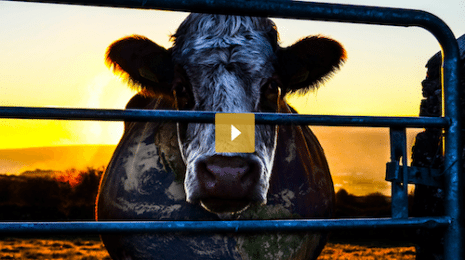
The Cowspiracy documentary (check it out!), reveals what we all need to be aware of, what’s happening every single day and why people are not talking about it. Kip also shares his expert knowledge on ways we can truly help the environment as well as educate ourselves and the people around us.
Earth Day gives us a great opportunity to be more aware and apply the knowledge we have gained. There is still hope for our planet! If we work together, we can make the world a healthier and more beautiful place!
Next, we have the documentary film, Food, Inc., takes a look at just how industrial our food supply has become. Conventionally raised cattle, for instance, live packed into tiny cattle lots where they stand toe to toe with thousands of other animals, walking through their own feces. In order to protect the cattle from infection due to these inhospitable conditions, ranchers add antibiotics to their feed. To feed more cattle more cheaply, cattle are given grain-based feed that fattens them quickly while depriving them of their natural nutritional source, grasses. This leads to highly stressed, sick cattle that are then slaughtered and brought to the grocery stores as food. Because of their inferior feed and living conditions, however, the cattle raised this way make inferior food. Cattle ranching is also responsible for methane gas and tons of animal waste that can end up in the water supply.
 The problem isn’t just in how the cattle are raised, fed, and slaughtered, however. Butchering and packaging uses fossil fuels, and then the end meat products may be shipped hundreds or thousands of miles to a final grocery store destination, using even more fossil fuels and contributing to greenhouse gases.
Beef is just one type of animal protein, but the industrialization of our food supply has led to ranchers taking similar measures with poultry, farmed fish, and other types of meat. The result is a significant contribution to global pollution and greenhouse gases, as well as the slow decay in the quality of our food supply.
Along with harming the planet, animal products can also be detrimental to your health. The end result of animal product metabolism is an acidic residue in your body, which leads to aging, bone demineralization, and potential long-term health issues. Consumption of animal products is also associated with heart disease, cancer, kidney disease osteoporosis, and other illnesses.
In 2009, the Archives of Internal Medicine published a study showing that, with all other things being equal, people eating the highest amounts of red and processed meats were more likely to die sooner of cancer and cardiovascular disease than their counterparts eating less red and processed meats. In The China Study, Dr. T. Colin Campbell discusses the correlations between intake of animal products ad diseases like cancer, osteoporosis, and cardiovascular disease.
Reducing your intake of animal products like meat, dairy, poultry, and fish can help both the planet and your health. By switching to a plant-based diet, you support more sustainable food supply practices while also doing your health a huge favor. If you can’t bring yourself to eliminate animal products entirely, consider minimizing intake to just a few meals per week and instead ingesting plant foods like leafy greens, fruits and veggies, nuts, seeds, and whole grains.
2. Buy local produce
How it helps the planet:
- Minimizes use of fossil fuels
- Local farmers often use processes that better protect soil mineralization
- Supports local economies and small farmers
How it helps your health and beauty:
- Locally, sustainably raised produce may be richer in vitamins and minerals because it is grown in non-depleted soil
- Eating more fruits and vegetables helps create an alkaline state in your body
- Fruits and veggies are loaded with nutritious plant enzymes that support better digestion.
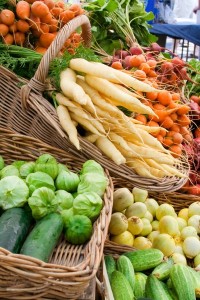 Factory farmers have nearly doubled or tripled crop yields in recent decades, resulting in food that is far less nutritious than it was 30 years ago. In other words, even as we eat more food it has less nutritional value than it ever has.
This occurs largely because the pursuit of higher yields via growing plants in monocultures, genetic modification, and use of pesticides and chemical fertilizers quickly depletes soil of minerals, rendering it sterile. Monocultures (large areas of just one type of plant) are also less hardy than polycultures, as well as being more susceptible to disease and pest infestation. The result is that farmers growing crops in monocultures typically utilize more pesticides, fungicides, and chemical fertilizers to protect yields.
Small, local farmers often use organic practices, raising produce in polycultures that care for the soil and protect the health of the plant. This has both positive environmental and health effects, keeping chemical fertilizers and pesticides out of our ground water and food supply, and providing healthier plant foods to sustain better long-term health.
You can support local farmers by purchasing food at farmer’s markets and co-ops, or by joining a local CSA (community-supported agriculture). When you join a CSA, you pay a monthly fee for a weekly box of fresh, seasonal, local fruits and vegetables that travel just a few miles from farm to table, minimizing the use of fossil fuels for transportation and supporting local, sustainable agriculture practices. If you’d like to find a farmers’ market or CSA in your area, visit LocalHarvest.org to search by ZIP code.
3. Change How You Clean
 How it helps the planet:
- Protects groundwater and water supply from dangerous chemicals
- Protects air quality
- Minimizes packaging waste
How it helps your health and beauty:
- Brings fewer chemicals into your home and thus, your body, which have the potential to cause hormonal, development and reproductive damage
I’ve talked before about household cleaning products and how hazardous they can be to your health. Among the top offenders:
- Bleach
- Air freshener
- Ammonia
- Drain cleaner
- Detergents
- Spray cleaners
Instead of using toxic house cleaning products, try more natural cleansers like Seventh Generation or mix up a batch of your own cleanser. Some of my favorite natural home cleaning aids include:
- Vinegar, baking soda, and water can help clean out ovens where food has been baked
- Vinegar and water is an effective countertop and floor cleaner (you can add some essential oils like grapefruit which help mask the vinegar-y smell)
- Lemon rinds to scrub your stove top
4. Change your beauty routine
 How it helps the planet:
- Minimizes harmful chemicals that can wind up in groundwater
- Stop supporting the production of harmful chemicals
How it helps your health and beauty:
- Keeps your pores from getting clogged
- Minimizes chemical exposure which may have hormonal and other repercussions
Conventional beauty products contain all kinds of chemicals that can harm your health and beauty. Among the many ingredients to watch for include:
- Fragrance (a generic term that can mean thousands of different chemicals!)
- Petroleum-based products
- Formaldehyde
- Preservatives like BHA and BHT
- Dyes
- DEA, MEA, and TEA
- Parabens
- Sodium laureth sulfate
- Triclosan
The solution is to find a beauty routine that minimizes chemicals. I developed Feel Good Skincare in an ethical way that doesn’t contain any of the above ingredients.
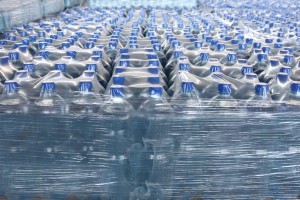
5. Ditch disposable water bottles
 How it helps the planet:
- Minimizes waste
- Protects the earth’s oceans
- Minimizes production of petroleum products
How it helps your health and beauty:
- Protects you from toxic leaching of petroleum products into the water you drink
Buying water in disposable plastic bottles is easy and convenient, so many people do it. But these ugly looking (at least when empty!) plastic bottles often wind up in landfills, streams, rivers, and ultimately, the ocean. In fact, scientists have discovered a huge area of plastic debris known as the Pacific Ocean Garbage Island, which is made up of plastic products that have made their way down streams and rivers and into the sea. Because the plastic is not biodegradable, it floats suspended in the ocean, winding up in the bellies of sea life and washing up on beaches. That’s an island no one would even want to get near!
Manufacturing water bottles creates another environmental health hazard, generating greenhouse gases and environmental pollution resultant of petroleum product manufacturing.
Bottled water may be hazardous to your health, as well. Many bottled water companies sell water from municipal tap water supplies, so it may be contaminated with chlorine, fluoride, and other chemicals you don’t want in your body. Though they may be “purified”, it doesn’t mean that they test for or necessarily avoid these heavy metals and other compounds. Further, phthalates may seep into the water from the plastic bottle, disrupting your body’s hormones.
Instead, find a good water filter and use a reusable water bottle made from an inert substance such as stainless steel or glass.
By paying attention to the foods you eat and products you use, you can contribute to better health: both for yourself and the entire planet! And THAT is truly a beautiful thing.
Love,
Kimberly

Hi Kim!
Do your beauty pairing guidelines approve of a wrap made of the following?:
-organic corn tortilla
-garlic hummus
-broccoli and carrot slaw
Sometimes I get confused about the protein carb combos.
Thank you!
Hi Kimberly,
Do you recommend a liquid B-12 vitamin brand that doesn’t contain any sugar additives?
Also, can I over-do it on stevia? I feel like I’m having it in everything these days. Carrying the packets and herbal decaf tea bags in my pockets to get through the cold winter. I’m just so worried that stevia will be the next agave, where we think its okay then find out it’s terrible and I’ve had too much!
Thanks again so everything! Happy Earth Day!
Namaste,
Katie
Katie I have the same query! I use stevia a lot and really enjoy it too…I hope it isn’t the case as in agave. I look forward to your response as well Kimberley.
Your advice and wisdom is gold!
Nina :0)